| Concept | What it means here |
|---|---|
| Outer boundary | Can be separated while the interior remains wrong |
| Transmission | Background visible through the material |
| Reflection | Surface appearance that should not simply be erased |
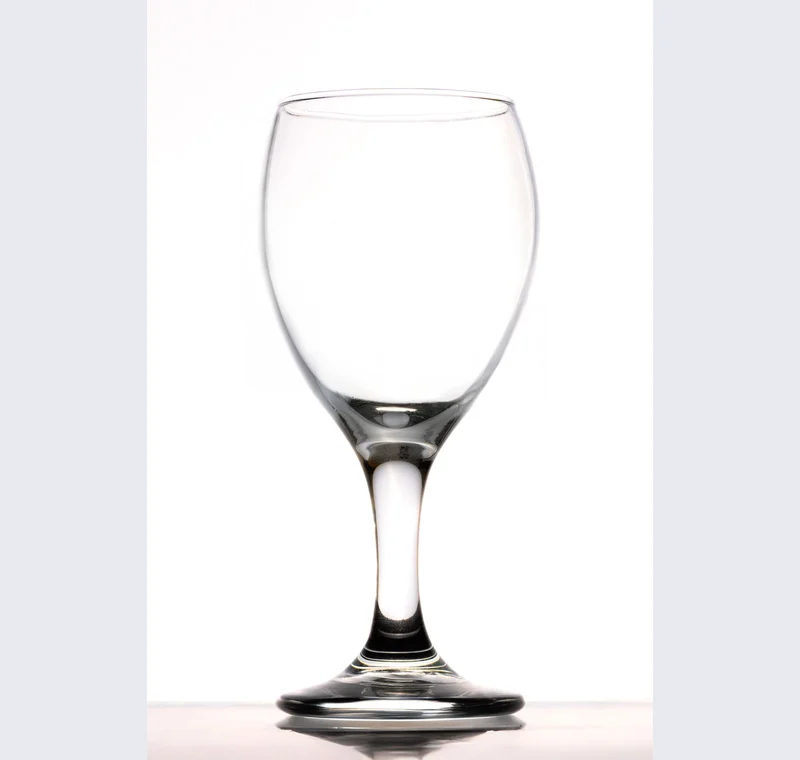

The scene is part of the visible object
A transparent object changes the light from the scene behind it. The photograph records that combined appearance. Selecting the object’s outer silhouette does not automatically separate the old background from reflections, highlights and refracted detail. This is why a glass cutout can look acceptable on the original backdrop and implausible on a new one.
The distinction also applies to clear plastic, translucent packaging and some polished materials. A general foreground mask may identify the whole object as opaque. That can preserve its shape but carry the old scene inside. A transparent canvas around the object does not make the material itself transparent.
Worked example: our glass sample
The model-evaluation page shows the actual glass result exported by this app. The exterior separates, while the interior remains opaque. Place that cutout on another color and the retained interior becomes visible as a mismatch. We keep this example because it exposes a meaningful limit of the shipped model instead of presenting only favorable subjects.
Erasing the entire interior would not be an accurate repair. It would remove highlights and parts of the material along with the old backdrop. A physically plausible composite needs a more careful estimate of the foreground contribution. The general brush is useful for obvious selection corrections, but it is not a specialist glass-reconstruction system.
Prefer a controllable capture when possible
If you control the product shoot, photograph the object on the intended final backdrop. This can avoid the need to reconstruct transmitted background later. Adjust lighting so that the outline and surface remain readable. Review the actual product color and transparency rather than accepting a visually attractive result that changes the material’s apparent properties.
For a marketplace listing, the photograph should communicate what the buyer will receive. A replacement background that makes clear packaging look opaque can be misleading even if the outer edge is clean. Preserve a contextual or unaltered detail view when the material matters to the purchase.
Know when to stop brushing
Use local corrections for detached scene fragments or an obviously missed opaque component. If the correction requires guessing how every interior reflection should interact with the new scene, the task has moved beyond ordinary silhouette cleanup. A different capture or a dedicated matting workflow is likely more appropriate.
Keep the original and label the edited version clearly in your own workflow. Do not mistake a technically valid transparent PNG for a solved visual composite. The file format can correctly store the mask while the mask itself remains unsuitable for the subject.
Put this method into practice: open the relevant local image tool →. Keep your original and inspect the exported copy.
Questions that come up
Why is the old background still inside the glass?
The model selected the object region without separating the transmitted scene. Exterior segmentation and interior matting are different problems.
Can edge softness fix the interior?
No. It changes the boundary transition, not the scene visible through the material.
What is the practical alternative?
When possible, photograph the object on the intended background. Otherwise use a workflow designed for transparent-material matting and inspect the result carefully.
Sources & method
Last checked: . Official rules can change. Calculated presets are identified separately.
- Actual model evaluation. Backdropless. Checked 2026-10-29.
- U2-Net: Going Deeper with Nested U-Structure. Xuebin Qin et al.. Checked 2026-10-29.
- Is a Green Screen Really Necessary for Real-Time Portrait Matting?. Zhanghan Ke et al.. Checked 2026-10-29.
- Published tool specifications. Backdropless. Checked 2026-10-29.